
Choosing the right flooring is a major investment, one that must strike a perfect balance between visual appeal, comfort, and function. While every homeowner desires a beautiful floor, durability is often the most critical factor—especially in busy homes with pets, children, or high traffic. The right durable material must withstand scuffs, scratches, spills, and constant wear without prematurely fading or breaking down.
Drawing upon industry knowledge and practical performance, here are some of the most durable flooring materials you can install in your home today.
1. The Modern Champion: Luxury Vinyl Plank (LVP/LVT)
In recent years, Luxury Vinyl Plank (LVP) and Luxury Vinyl Tile (LVT) have emerged as the frontrunners in residential durability, particularly where moisture is a concern. LVP is engineered to mimic the look of hardwood or stone but with unbeatable resilience.
- Durability and Wear: LVP’s durability is defined by its wear layer (a clear top coating, measured in mils). A quality residential LVP should have a wear layer of 12 mil or higher (up to 20 mil for heavy traffic). It is highly resistant to scratches and dents from toys or falling objects.
- Water Resistance: Modern LVP/LVT often features a Waterproof Polymer Core (WPC) or Stone Polymer Core (SPC), making the material completely impervious to water. This makes it ideal for kitchens, bathrooms, laundry rooms, and basements where traditional wood and laminate would fail.
- Pros: 100% waterproof, excellent scratch and dent resistance, comfortable underfoot, easy installation (click-lock systems).
- Cons: Not refinishable; extreme sunlight can cause fading or buckling over many years if not installed correctly.
2. The Resilient Natural: Bamboo
Bamboo has become a popular alternative to traditional hardwood, celebrated for its good looks, affordability, and eco-friendly profile. Although technically a grass, high-quality bamboo is significantly tougher than many conventional woods.
- Durability and Finish: Bamboo’s hardness is measured using the Janka test. High-quality products, particularly “strand-woven” bamboo, achieve high Janka ratings and are protected by multiple coats of finish. Look for flooring with seven to eight coats of Aluminum Oxide finish for maximum wear resistance. Lower-quality products (3-4 coats) will wear quickly.
- Water Resistance: Unlike solid hardwood, quality bamboo stands up relatively well to water and humidity changes, making it a viable option for many main-floor rooms.
- Pros: Highly durable (when high-quality), affordable, renewable resource, and visually distinct.
- Cons: Quality varies drastically; inexpensive options scratch easily.
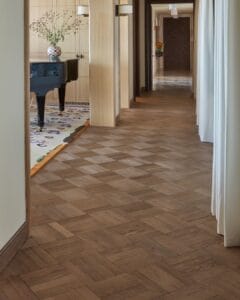
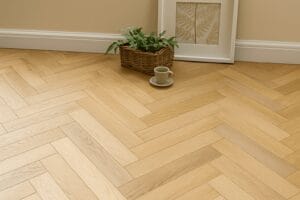
3. The Classic Workhorse: Solid Hardwood
Solid hardwood evokes richness and classic charm. While it can be prone to scratching and water damage, its extraordinary lifespan earns it a spot on the durability list because it is fundamentally repairable.
- Durability and Longevity: Today’s pre-finished hardwood can come with a 50 to 100-year warranty against wear. Hardwood is one of the few materials that is considered “indestructible” in terms of its ability to be renewed.
- Refinishing Power: Although hardwood scratches easily (even the hardest woods), it can be sanded and refinished multiple times—often three to five times over its lifetime—restoring it to its original perfection. This perpetual renewability makes it a long-term investment.
- Pros: Timeless aesthetic, high resale value, can be refinished multiple times.
- Cons: Not water-resistant (avoid basements and full bathrooms); expensive; easily scratched by pet claws or dropped objects.
4. The Indestructible Foundation: Concrete
Concrete flooring, once confined to garages and basements, is now a major interior trend, particularly in modern and industrial-style homes, largely because of its sheer resilience.
- Durability: Concrete is practically indestructible against physical impact, high traffic, and scuffing. It’s a trendy staple in restaurants, gastropubs, and retail spaces for a reason: it withstands commercial-grade wear.
- Maintenance: Concrete is easy to clean and requires very little maintenance besides occasional sealing to protect the surface.
- Pros: Ultimate durability, zero damage from water, low maintenance, customizable finishes (stains, polishing).
- Cons: Hard underfoot, which can be uncomfortable; typically cold (requires radiant heating in cooler climates); needs area rugs to reduce echo and increase comfort.
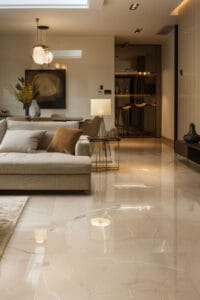
5. The Waterproof Titan: Porcelain and Ceramic Tile
For any area where water or extreme mess is inevitable, ceramic or porcelain tile is the undisputed king of durability.
- Durability: Tile is almost impervious to scratches, dents, and heavy furniture impact. Porcelain, in particular, is denser and less porous than ceramic, making it highly resistant to breakage and moisture.
- Water Resistance: When properly installed with sealed grout, tile is completely waterproof, making it the top choice for full bathrooms, showers, and mudrooms. It is also completely color-fast and won’t fade.
- Pros: Completely waterproof, ideal for radiant heating, extreme scratch and dent resistance, lifetime longevity.
- Cons: Cold and hard underfoot; grout requires regular sealing and cleaning; professional installation is often required.
Finding the Best Fit for Your Life
| Room / Hazard | Best Durable Option | Runner-Up |
| High Moisture (Bathrooms, Basements) | Porcelain/Ceramic Tile | Waterproof LVP/LVT |
| High Traffic (Hallways, Entryways) | LVP/LVT (20 mil+) | Concrete |
| Long-Term Investment | Solid Hardwood (due to refinishing) | Porcelain Tile |
| Pets & Kids (Scratch/Stain) | LVP/LVT or Patterned Tile | High-Quality Bamboo |
By matching the durability characteristics of these materials to the specific needs of each room in your home, you can confidently invest in a floor that is built to last.